
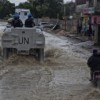
When Hurricane Matthew hit Haiti on 5 October, the fields where crops were grown were washed away; houses were flattened like cardboard boxes and hundreds of people were killed. The number of dead is now close to 1000 and cholera is once again a fatal danger on our shores. UNICEF says more than 600,000 […]
Archive | Poverty and development RSS feed for this section



Giving people a voice: lessons from measuring corruption
As the world embarks on the ambitious global development agenda known as the Sustainable Development Goals (SDGs), it is important to have accurate measures of progress, or even lack of progress. Otherwise the goals themselves are at risk of becoming illegitimate. To track the goals, we need to have meaningful indicators that reflect what is […]
New milestone in fight against global corruption
On 25 September 2015, the world’s leaders assembled at the UN in New York and made a historic statement in approving 17 key objectives to focus actions across the globe to bring the core strengths of our civilisation to its real potential. The UN General Assembly adopted new global goals, the “Sustainable Development Goals (SDGs)” […]
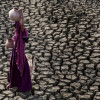
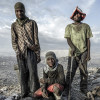
Photo competition winner: “Corruption has left a stain on humanity”
Earlier this year, we teamed up with the Thomson Reuters Foundation and the International Anti-Corruption Conference to launch “Capture Corruption”, a global photo competition for the most powerful images of corruption and its devastating impact on lives around the world. Today, we’re revealing the winning selection. In first place in our 31+ category is Giles Clarke – […]
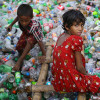
Photo competition winner: “Children are most affected by corruption”
Earlier this year, we teamed up with the Thomson Reuters Foundation and the International Anti-Corruption Conference to launch “Capture Corruption”, a global photo competition for the most powerful images of corruption and its devastating impact on lives around the world. Today, we’re revealing the winning selection. Choosing from more than 1500 entries, our judges selected A.M Ahad’s […]
World Bank adopts key Transparency International goals in new procurement policies
The World Bank funds 1,800 procurement projects to the tune of US$42 billion in 172 countries, often in challenging environments. It is therefore important to have strong measures to counter corruption. Last week, the Bank announced a new procurement framework that includes many of the recommendations and suggestions Transparency International and Transparency International USA have […]
Anti-Corruption Cards: Cambodia’s new craze
Transparency International Cambodia recently launched its Anti-Corruption Cards that offer shopping discounts to citizens who sign up to the Declaration Against Corruption. So far more than 8,000 people in the capital Phnom Penh and provinces have received their cards, entitling them to savings of up to 60 per cent at a variety of shops […]
FIFA reform: suggestions for fair and transparent finances
The resignation of Sepp Blatter as FIFA President on 2 June was swiftly followed by a commitment to immediate governance reform, led by independent chair of FIFA’s audit and compliance committee Domenico Scala. Central to Scala’s mandate will be a review of financial transparency, as well as the proportional representation of influence within FIFA. This […]
Know your contractors: transparent ownership reduces corruption
Procurement is at the heart of the work that the World Bank and other international development banks do. Countries borrow from these multilateral organisations to develop the public works and services their citizens need: such as healthcare, education, sanitation and infrastructure. Through public procurement, countries use the borrowed funds to acquire expertise, labour and supplies […]
Following the money: why transparent development finance matters
Different numbers have been floated around for what it would cost globally to end poverty, stop climate change and make sure no one goes hungry. These numbers add up into trillions of dollars. How are we going to keep track of the money to make sure it is not wasted, lost to corruption or mismanaged? […]
- State Capture in South Africa
-
 What’s next for Ukraine?
-
 Cleaning up sport: conflicts of interest at the top
-
 OGP: France must do more to tackle corruption
-
 Pharma companies in Slovakia: Uncovering conflicts of interest
-
Nokubonga Ndima: Young people can make a change for a better future...
-
Benjamin M: Very good article! Congrats!...
-
arun kottur: In India sports minister was involved decades are ...
-
Ekonomi: Very beneficial article. Thank you very much. htt...
-
ksweeney1: I do not agree that https://apex.aero/2016/09/22/g...
 Connect with us on Facebook
 Follow us on Twitter
 Add us to your circle on Google +