






A recently-released report on State Capture indicates that one family could seemingly succeed in skewing the spending priorities of the government in Pretoria. It’s a crisis induced by weak state institutions and it has enraged many South Africans. South African Public Protector, Thuli Madonsela’s much anticipated report on state capture released on November 3, 2016 […]

OGP: France must do more to tackle corruption
Opening up government data to fight corruption has been a stated aim for many Open Government Partnership members. When data is open by default information is easier to work with, investigate, understand and leverage to combat corruption. With open data, released according to agreed standards, people have a key means to hold their institutions and […]

Pharma companies in Slovakia: Uncovering conflicts of interest
Two years ago, the leading German pharmaceutical company, Boehringer Ingelheim, applied to Slovak authorities for its new anti-diabetes drug, Synjardy, to be covered by health insurance. Drug manufacturers are keen for their medicine to be covered since it would reduce its price and therefore could sell more. Boehringer estimated in its application that within four […]

The FATF report on the USA: More roof than holes on average
You arrive in a new city on a rainy day and check into your top floor hotel room, only to find the roof is leaking. When the receptionist comes to check, he looks up and says, “I don’t see what the problem is, madam. There is clearly more roof than holes on average.” This has […]

Cleaning up Georgia’s elections
Georgians are getting the message: elections are important and tampering with the process has consequences. This year, there were fewer violations, leading to a cleaner election. It was hard work, however. From when the election process started in June to when people went to the polls on 8 October, Transparency International Georgia was on the […]
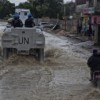
Haiti: disaster prone and ill-equipped to fight corruption
When Hurricane Matthew hit Haiti on 5 October, the fields where crops were grown were washed away; houses were flattened like cardboard boxes and hundreds of people were killed. The number of dead is now close to 1000 and cholera is once again a fatal danger on our shores. UNICEF says more than 600,000 […]

Why are three of the world’s richest countries doing so little to stop corruption?
One of the best-known data points in the anti-corruption field is the estimate from Global Financial Integrity that US$ 1.1 trillion in proceeds of corruption, crime and tax evasion are taken from developing countries every year and invested in Western banks, real estate, and luxury goods. The volume of illicit financial flows is higher than […]

Benin’s fight against corruption is only beginning
The Republic of Benin is one of West Africa’s most stable countries. Sandwiched between Nigeria and Togo to the east and west, with Niger and Burkino Faso to the north, Benin has a population of about 10 million, 40 per cent of which lives below the poverty line. It gained independence from France in 1960 […]

What are the candidates hiding?
A September 21 Gallup survey concluded that, “At no point in the last four decades have Americans expressed less trust than they do today in US political leaders or in the American people who voted those leaders into office.” Indeed, only 42 per cent of Americans trust their political leaders and just 56 per cent […]

Obituary of Joe Muiruri Githongo
Joe Githongo passed away on 8 September in Nairobi following a long illness. Joe was one of the initial inspirations for Transparency International (TI)and a member of its first Board. He was a charismatic figure whose energy and enthusiasm was always contagious and impacted on many both within and outside Kenya. In 1989 Joe was […]
- State Capture in South Africa
-
 What’s next for Ukraine?
-
 Cleaning up sport: conflicts of interest at the top
-
 OGP: France must do more to tackle corruption
-
 Pharma companies in Slovakia: Uncovering conflicts of interest
-
Nokubonga Ndima: Young people can make a change for a better future...
-
Benjamin M: Very good article! Congrats!...
-
arun kottur: In India sports minister was involved decades are ...
-
Ekonomi: Very beneficial article. Thank you very much. htt...
-
ksweeney1: I do not agree that https://apex.aero/2016/09/22/g...
 Connect with us on Facebook
 Follow us on Twitter
 Add us to your circle on Google +